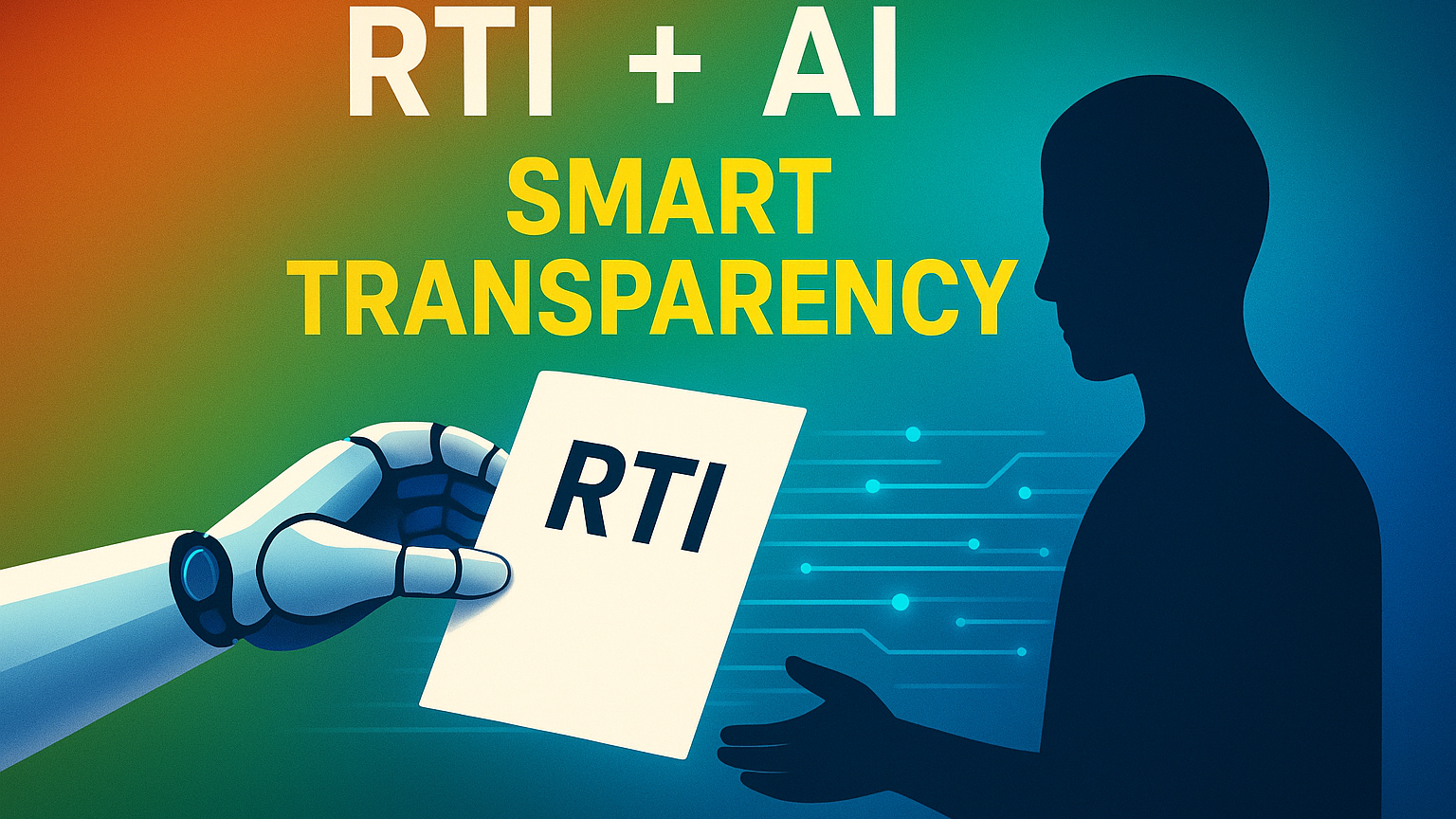
The Right to Information (RTI) Act empowered citizens to question government actions, but as the number of RTIs grew, so did delays, data overload, and inefficiencies. Now, Artificial Intelligence (AI) promises to simplify how citizens access information — making transparency smarter, faster, and more proactive.
Fact Check: The Current RTI Landscape
-
Over 60 lakh RTIs are filed in India every year.
-
As per the Central Information Commission (CIC), nearly 40% of RTI appeals face delays beyond the legal 30-day period.
-
Common reasons include manual processing, file mismanagement, and staff shortages.
Clearly, the system needs tech-driven support — and that’s where AI steps in.
How AI is Transforming RTI in India
1. AI in Action: Automating RTI Responses
Example:
Imagine a citizen asks, “How many government schools lack toilets in Maharashtra?”
Traditionally, this query travels through multiple departments.
But with AI-driven databases, the system can instantly fetch structured data and generate an accurate reply — no manual search required.
Impact: Reduces delay, standardizes responses, and prevents data manipulation.
2. Predictive Transparency: AI Identifying Trends
AI can analyze thousands of RTI applications to identify common themes — for example, frequent queries about water supply or road repairs.
Governments can then proactively publish this information, reducing RTI load and increasing transparency.
Real Example:
The Madhya Pradesh government tested a digital dashboard that uses AI to detect frequently asked RTI topics — helping departments pre-disclose information before it’s even requested.
3. Chatbots for Citizens
AI-powered chatbots can guide citizens step-by-step to:
-
File RTIs in the correct format.
-
Identify the right public authority.
-
Track application status in real-time.
Example: The Maharashtra RTI Portal’s AI Bot helps users draft RTIs in simple language — translating from Marathi or Hindi automatically.
4. Language Simplification & Translation
AI-driven translation tools can convert government responses into regional languages, ensuring inclusivity.
For instance, if a government reply is in English, AI can auto-translate it into Telugu, Hindi, or Bengali, bridging the language gap.
5. AI for Accountability
AI can analyze RTI response data and flag delays, missing information, or repetitive denials.
This helps the Central Information Commission track low-performing departments — pushing for real accountability.
Conclusion: Smart Transparency is the Future
The merger of RTI and AI marks a turning point for citizen empowerment. While RTI gave citizens the right to question, AI gives the power to simplify.
With AI, transparency doesn’t have to be a struggle — it can be a seamless, data-driven process that brings the government closer to the people.



 Login With Google
 Continue as Guest
Post a comment